Esther Hermouet brings Heritage and Innovation to Her Role at Historic Bordeaux Estate.
Location: Fronsac, Right Bank of Bordeaux, France
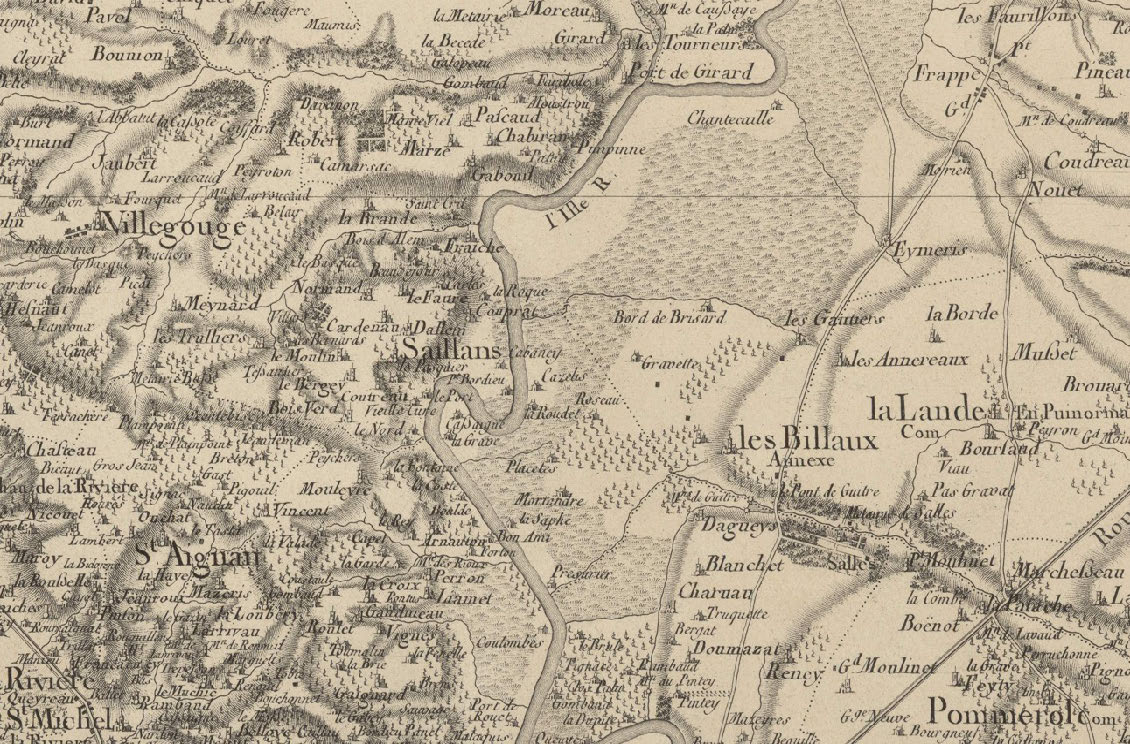
On the famed Right Bank of Bordeaux, in the village of Fronsac, sits the historic Château Roc Meynard. We are not exaggerating when we say historic. The Meynard land appears on maps as far back as 1785, and the vineyards have been cultivated since the 18th century. The estate has been family-owned and operated for five generations.
The estate spans approximately 50 hectares and comprises a single-piece vineyard composed of neighboring plots across two appellations: 26 hectares in Bordeaux and 22 in Fronsac. The land is hilly, with a series of plateaus that make it practical to keep a close eye on the vines, plot by plot.
Family and Generational Timeline
Roc Meynard has always been family-owned and operated, beginning in 1911 when Osmin Roy acquired the first plots. The estate remained in the Roy family until 1987, when Philippe Hermouet took over management and began shaping the estate into its current form. In 2024, leadership transitioned to his daughter, Esther Hermouet, who is poised to extend her father’s legacy and the heritage of the Hermouet and Roy families.
“My project is meant to be a new chapter of the Roc Meynard story, not a brand-new book.”
When Philippe Hermouet assumed leadership in the late 1980s, he brought an entrepreneurial mindset and the pragmatism of his engineering background. There had been severe frosts in the 1970’s, and the first order of business was rebuilding those damaged vineyards. Expansion followed through targeted acquisitions, strengthening both scale and coherence. Then the expansion began with strategic plot acquisitions. By the mid 90’s, it was time to modernize production, so they built new winery facilities and a barrel cellar. The senior Hermouet built an estate design to produce timeless, expressive wines.
Esther Hermouet: Background and Path
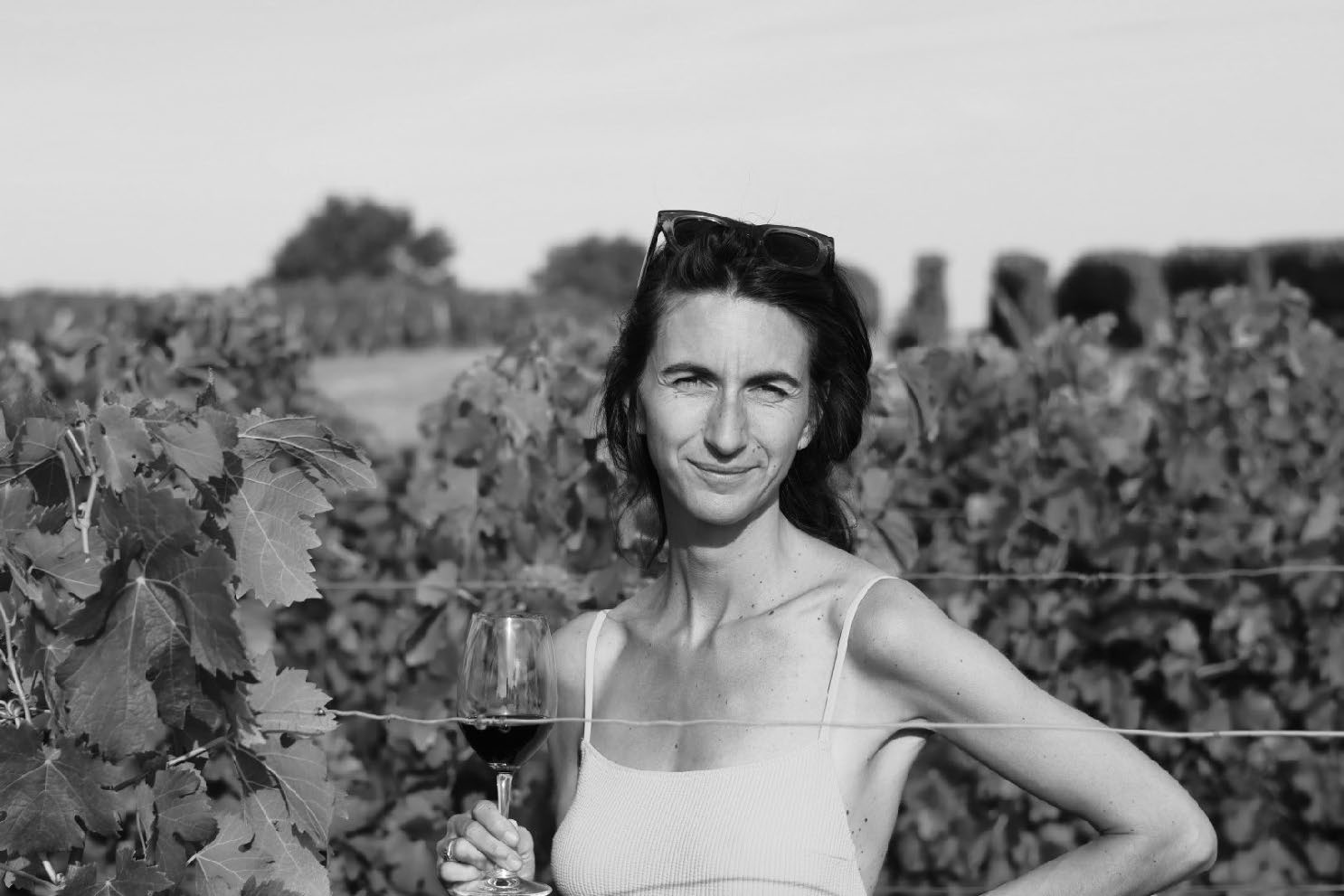
Daughter Esther Hermouet’s leadership at the vineyard was by no means a fait accompli. While the estate was always her touchstone, she left Fronsac and Bordeaux, where she grew up at 18, to pursue her education, studying business in Paris and Lille. She may have left Bordeaux, but wine was in her blood, and she did stints at Moet Hennessy, Campari, and Champagne Lallier in strategic marketing roles.
These years broadened her perspective beyond Bordeaux. She worked closely with global markets, brand strategy, and wine communication, while also gaining exposure to New World wines and different approaches to viticulture and cellar work. Along the way, she learned from a wide range of cellar masters and mentors, including Dominique Demarville, whose influence remains important to her thinking.
Esther’s Role Today
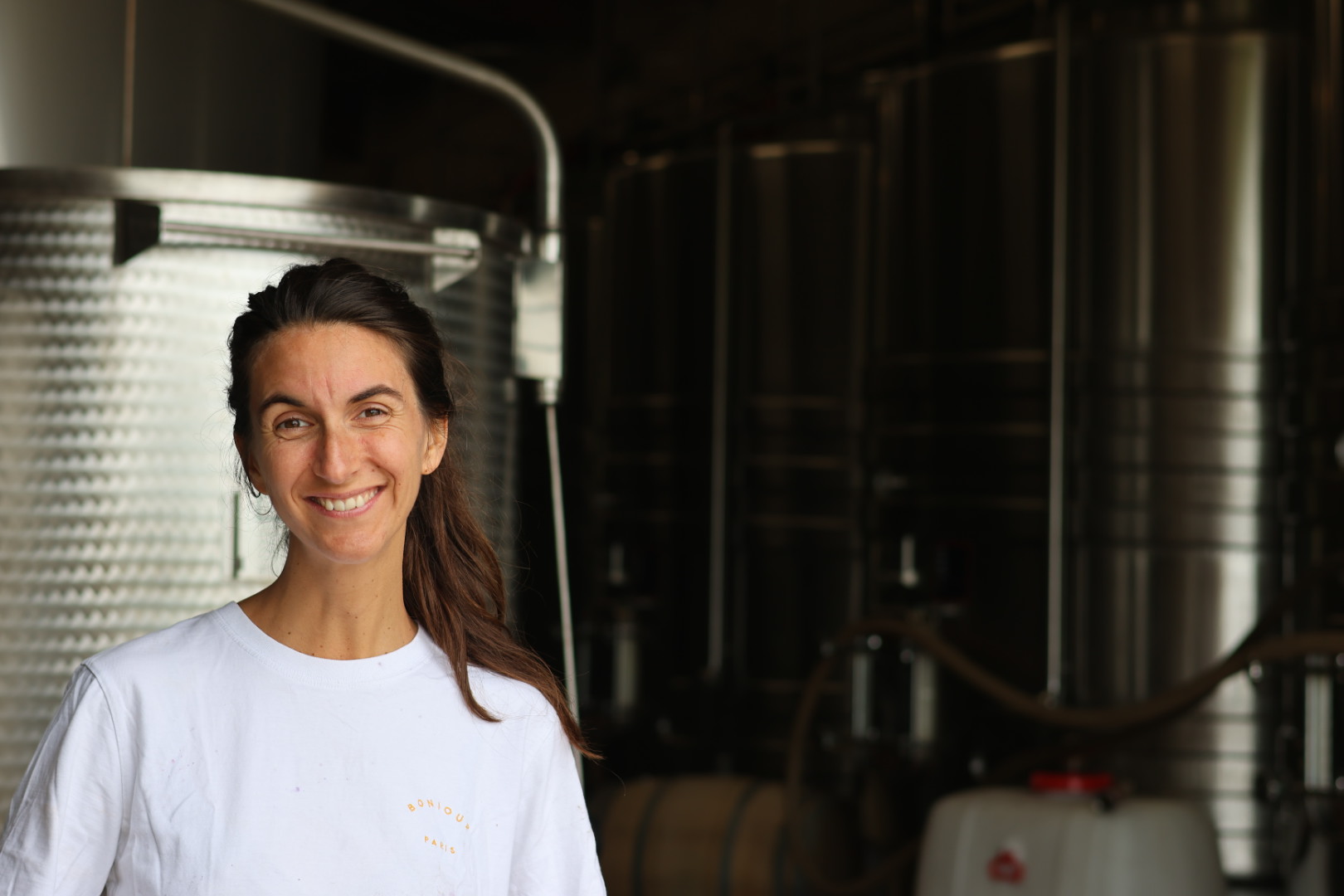
Under Esther’s leadership, the six-person team at Roc Meynard is threading the needle between heritage and innovation. Her experience in large wine organizations sharpened her entrepreneurial instincts, which she shares with her father, and drew her back to the family estate with a clear interest in both business operations and long-term vision.
She did not limit her role to management alone. Alongside overseeing finance, logistics, trade, and communication, she committed to building technical expertise, earning diplomas in tasting and winemaking and pairing formal training with hands-on work in the vineyard and cellar.
“My role is a multi-faceted one. I’m building my vine-growing and winemaking skills while also running the business and shaping its long-term vision.”
Esther describes her role as conductor-like. She sets direction and momentum, shapes the estate’s vision and image, supports the team, and manages a gradual transition with her father.
“You inject a lot of yourself into the wine you create. People are a key component of terroir.”
Winemaking Philosophy
A clear vision guides Esther’s winemaking philosophy: “Precision brings reliability, and timelessness echoes contemporaneity.” Three core values bring vision to life in the day-to-day estate operations: sincerity, curiosity, and creativity.
Vineyard and Cellar Practices
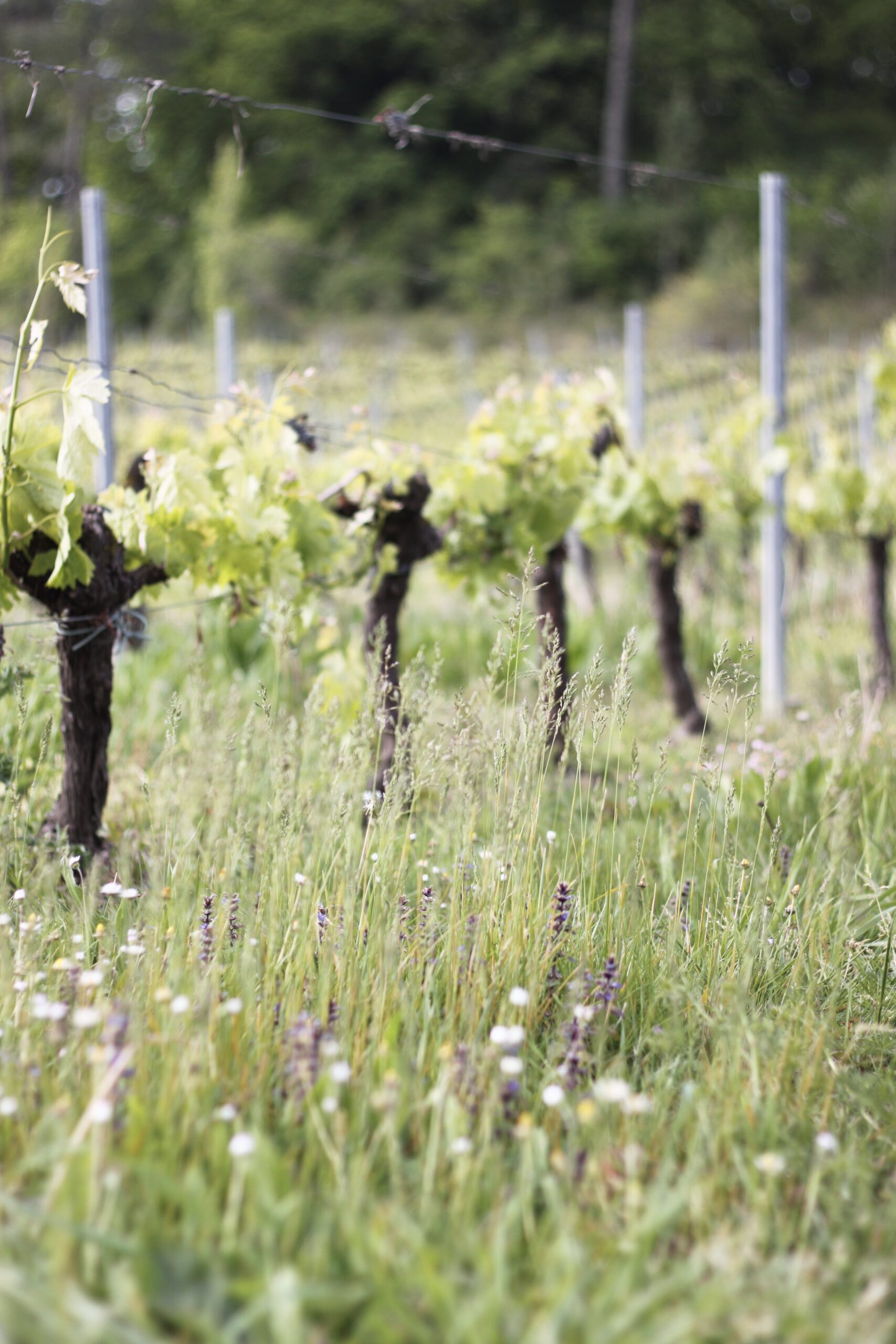
Two practices define how Roc Meynard functions: observation and biodiversity. Firstly, observation guides all vineyard and cellar work. There is no fixed formula applied across the estate. The team closely monitors each plot and tailors decisions to its specific characteristics.
“There is no one-size-fits-all rule. Observation and tasting guide every decision, from harvest to bottling.”
Nearly 15 hectares of the estate are biodiversity zones, including woods, hedges, pastures, and green corridors throughout the vineyard. These areas support a wide range of plant and animal life, including pine, juniper, green oak, truffle oak, and 21 recorded species of native orchids, as well as habitats for birds such as the Orpheus warbler.
“We address the estate as a farm, recreating virtuous circles between culture and nature.”
Terroir and Soils
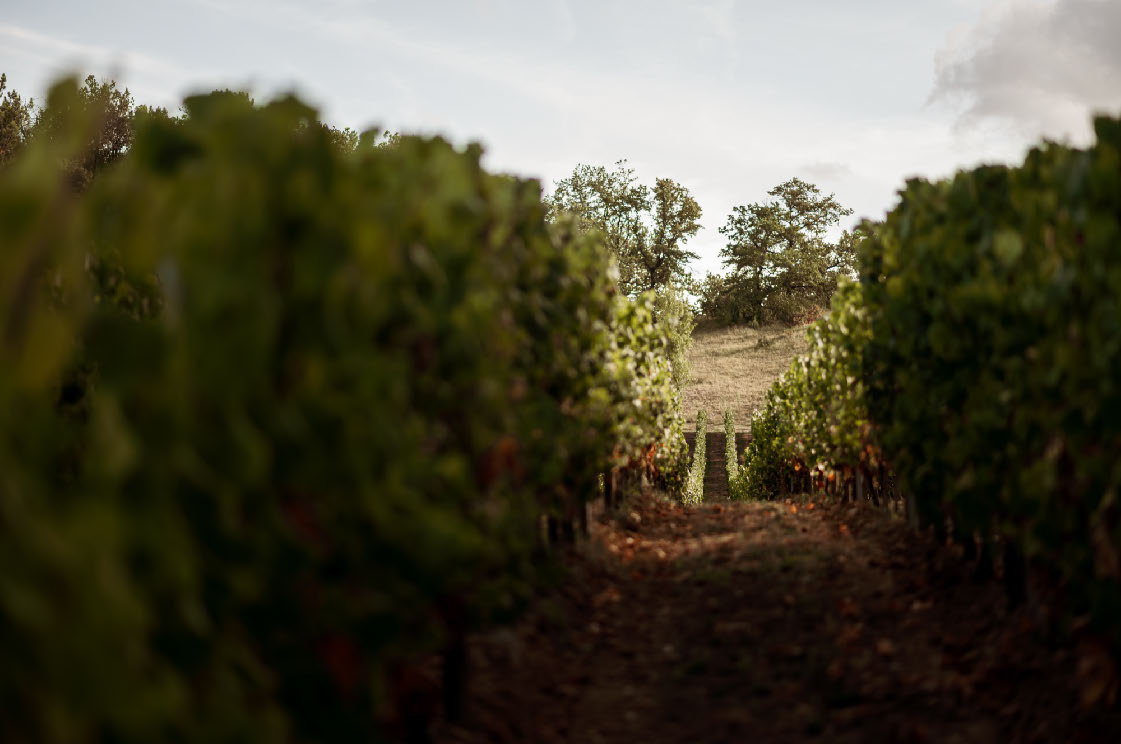
The estate’s vineyards sit on classic Right Bank clay-limestone soils, with clay-dominant lower slopes and hillside parcels on Palaeocene formations, often referred to as the molasse du fronsadais. These soils regulate water naturally, helping vines manage dry conditions while supporting slow, even grape maturation. The result is freshness, structure, and aromatic precision that carry through to the wines.
Sustainability and Certifications
Sustainable farming at Roc Meynard is nothing new. Natural grass cover has been in place since 1993, complemented by mechanical work under vine to protect soil health. The estate holds both High Environmental Value (HVE) and ISO14001 certifications, formalizing its environmental commitments.
Varieties and Planting Philosophy
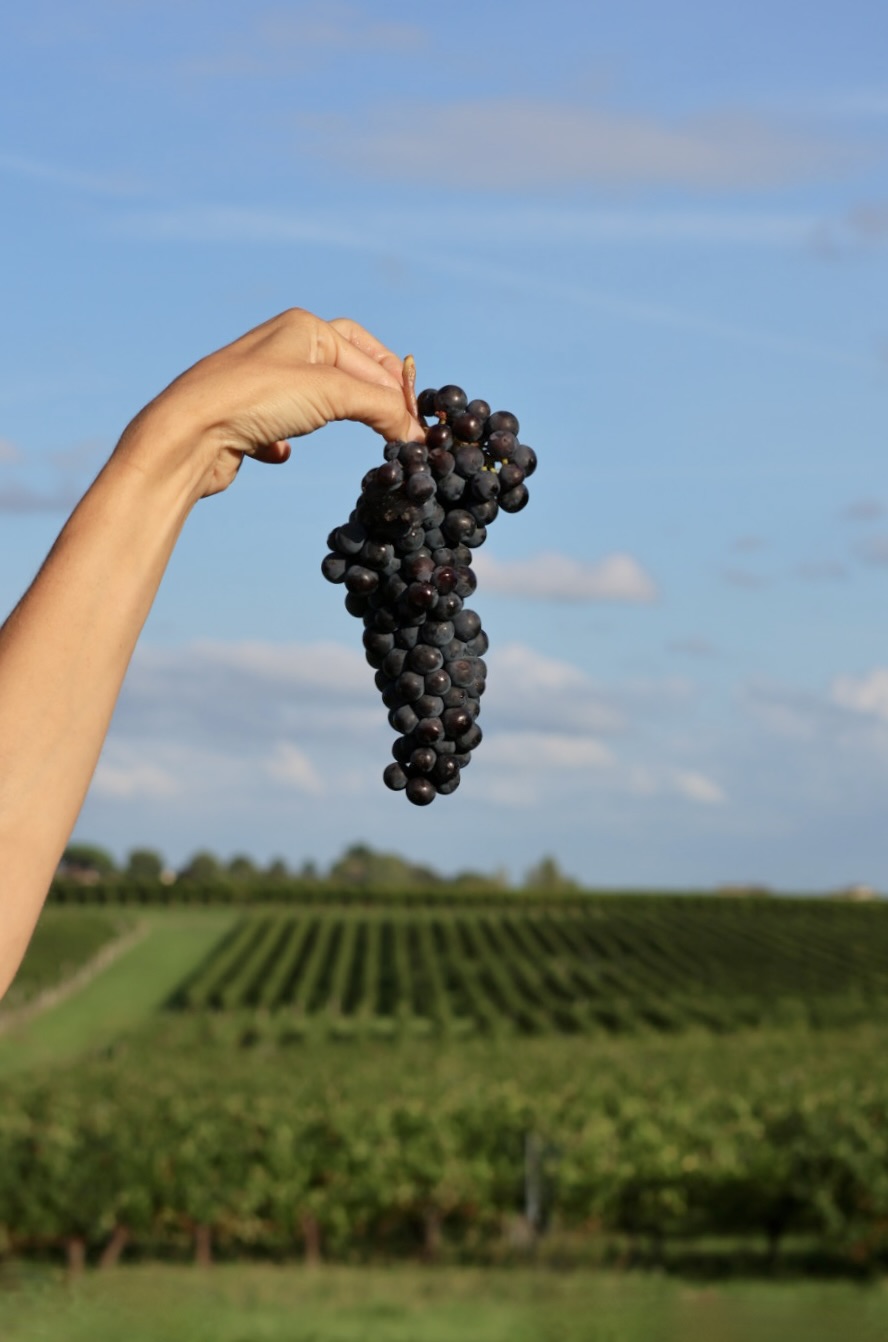
Merlot remains central to the estate, reflecting its Right Bank identity. Cabernet Sauvignon plays a supporting role where structure and lift are needed. Malbec has been replanted as a nod to the estate’s early history, when it was more widely grown on the property.
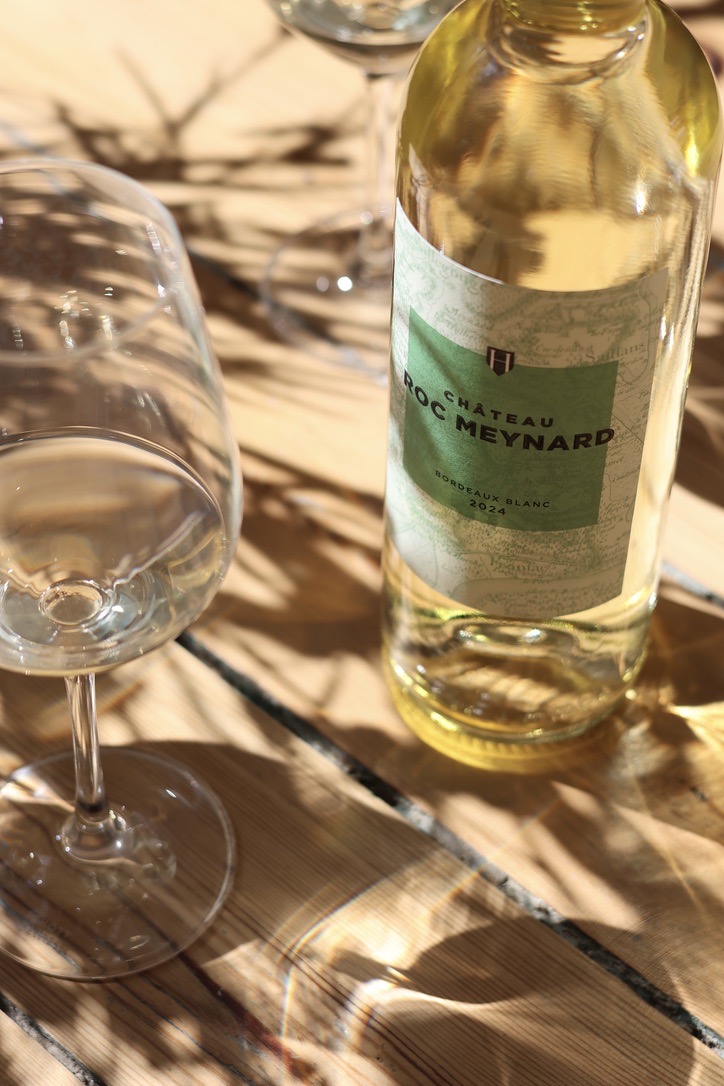
White varieties also play an essential role. Sauvignon Blanc and Sémillon reconnect Roc Meynard to Bordeaux’s white wine tradition and to its own history in that category. The estate remains open to exploring additional varieties as climate and growing conditions continue to evolve.
Team Structure
Mélodie Blanc oversees winemaking and viticulture, working alongside a consistent team including Wilfried, Muriel, Yann, Pierre, and Bali. The estate also works with consulting oenologist Bruno Lacoste. Philippe Hermouet remains involved, providing continuity, while Esther guides the estate into the future.
Wine Portfolio
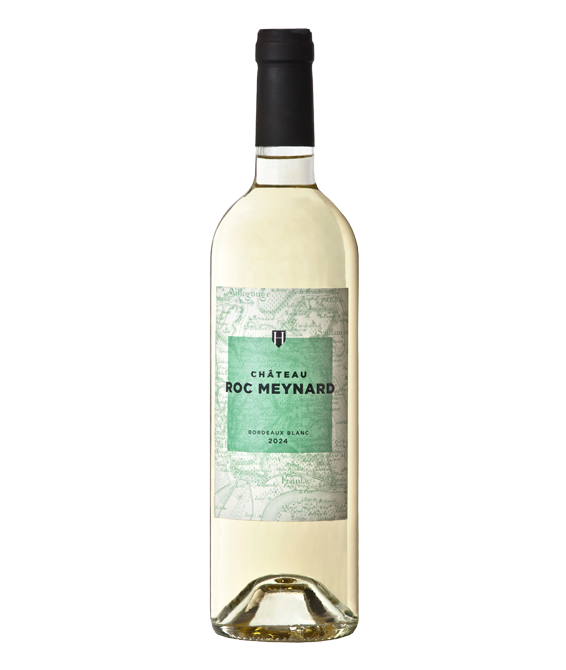
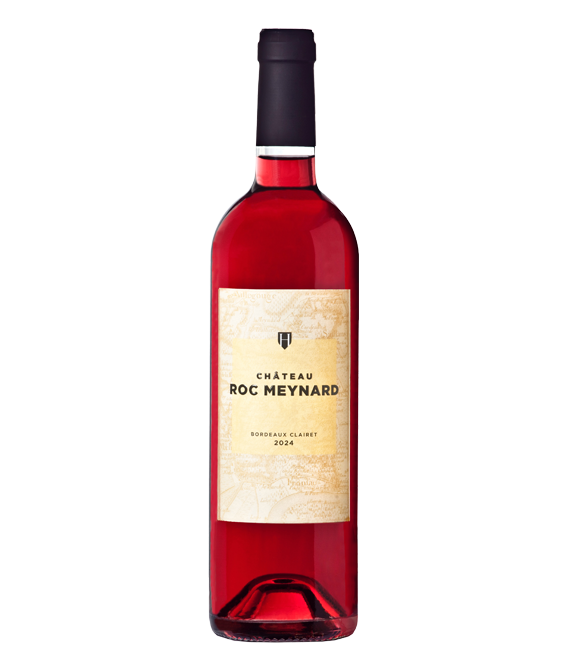
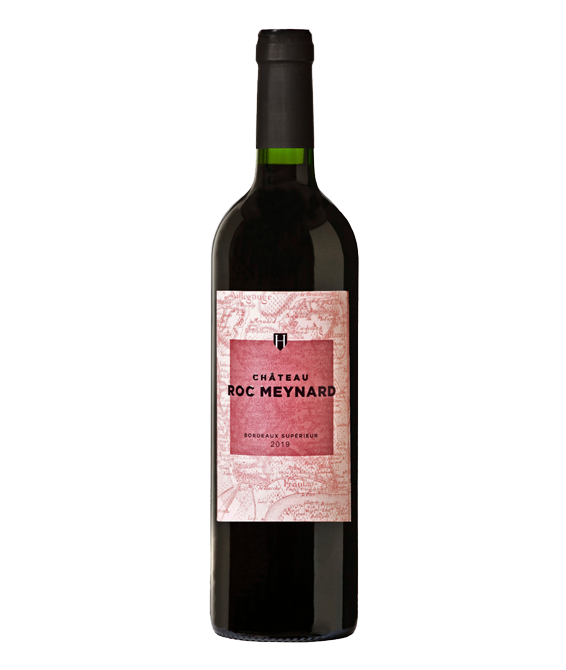
Across the range, the Roc Meynard style emphasizes liveliness, freshness, and clarity. The portfolio includes red, white, rosé, and clairet wines designed for the table and everyday enjoyment, with the structure to age and the balance to drink well now.
For Esther, the estate and the land are inseparable.
“In my life, this estate represents pristineness, commitment, creativity, and freedom.”
Roc Meynard is where she grew up, where she returned after years away, where she was married, and where friends now gather. Today, it is also where she is shaping the next chapter of Roc Meynard.